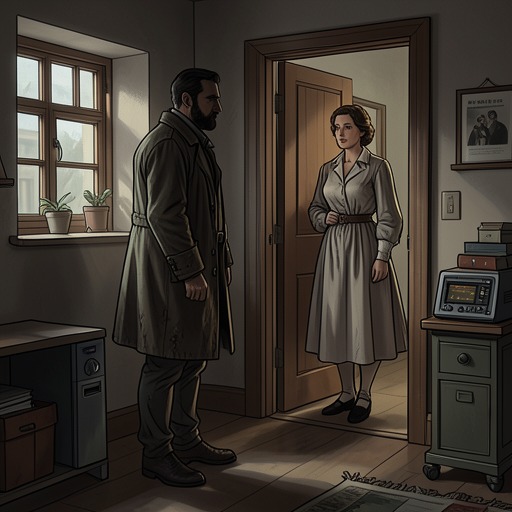
The old unhappy feeling
David CopperfieldThe old unhappy feeling is David Copperfield’s name for a persistent, difficult-to-define sense of lack that shadows his marriage to Dora Spenlow. It does not cancel his love for her or the happiness she gives him. Instead, it marks the distance between the marriage he once imagined and the companionship he actually has, and becomes a measure of David’s growing ability to examine his own part in that distance. The feeling remains unresolved in origin: David considers it both a common disappointment of growing up and something specific that might have been different in his life.
Meaning and First Appearance
The motif emerges in David’s account of married life, where it is described not as a dramatic crisis but as a subdued absence. He loves Dora and is happy with her, yet the happiness he had vaguely anticipated is not the happiness he experiences. The feeling is deepened rather than clarified as he tries to understand it, and he imagines it as sorrowful music faintly heard at night. That figure makes the lack seem both intimate and elusive: it recurs within him, but does not point neatly to one event or grievance.
David’s account also resists treating dissatisfaction as proof that his affection has failed. He says that he always loved Dora, and that the feeling could sleep and half-awaken within him without showing itself in his words or actions. He continues to shoulder the household’s cares and projects, while Dora remains fond of him and proud of his growing reputation. The motif therefore holds two truths together: their attachment is real, and their life together does not fulfill every hope he once attached to love.
Memory, Loss, and the Past
David connects his adult reflections to an older sense of wanting or loss, but does not claim to have solved its origin. He recalls the enchantment of his youth and feels that the present cannot reproduce its brilliance. At first he interprets the difference as an inevitable fading of youthful dreams: the past appears more splendid because it belongs to a stage of life he has outgrown. Yet the same reflection suggests a more particular possibility—that a wife who could have been his counsellor and shared more of his thoughts might have helped fill the absence.
The earlier family history offers a context for that language of loss without reducing the motif to a single cause. David remembers his mother, Clara Copperfield, first as the young, affectionate figure of his earliest impressions. After her death, Peggotty’s account of her final hours strengthens that childhood image rather than restoring the later years of her life to his memory. Elsewhere, David recalls the misery of lessons overseen by Mr. Murdstone and Jane Murdstone, and later recognizes how easily, at ten, he was left without anyone to speak on his behalf and sent into work. These experiences establish a life marked by bereavement, neglect, and premature responsibility. The narrative makes them part of the background against which a recurring feeling of want can be read, but David himself leaves the connection open rather than offering a single explanation.
Dora and the Education of the Heart
The contrast between expectation and experience begins with the force of David’s first meeting with Dora. He falls in love instantly, idealizing her as a figure beyond ordinary measure before he has time to know her. That overwhelming first impression gives the later marriage a remembered brightness against which ordinary domestic life can seem diminished. The motif does not simply accuse Dora of failing to match the ideal: it also exposes how much of the ideal was created by David’s youthful imagination.
In married life, David tries to teach Dora practical matters. When she grows bewildered or turns from the lesson to playful distractions, he recalls her natural gaiety and abandons the attempt, returning instead to the guitar. He sees her as his child-wife and worries that pressing his own standards upon her would make her unhappy. At the same time, he wishes she could have more character and purpose, and could share the thoughts and responsibilities he carries. The mismatch is therefore described as a difference of capacity and aim, not a lack of tenderness. David recognizes that he had hoped Dora would help sustain and improve him in ways she could not.
Reflection, Restraint, and Change
David’s understanding develops through competing interpretations. He weighs the belief that youthful dreams are naturally unrealizable against the thought that his own marriage might have been different. He can hold these conclusions side by side without fully reconciling them. In his thoughts, the contented days he once associated with Agnes Wickfield appear like a life that can no longer be revived; he also wonders, briefly, what might have happened had he and Dora never met, then recognizes how thoroughly Dora has become part of his existence.
The language he remembers from Annie Strong gives this reflection a more exact ethical shape. David repeatedly recalls the idea that an undisciplined heart can make a mistaken choice and that marriage is deeply troubled by a mismatch of mind and purpose. He applies the first thought to his own courtship: had his heart been more disciplined, he believes, it could not have felt for Dora as it did when he married her. The recognition is not a repudiation of that love; it is a judgment on the immaturity with which he first understood it.
His practical response is to stop trying to remake Dora and instead adapt himself to her. He resolves to share what he can, accept the responsibilities he must carry, and seek happiness without demanding that she become his counsellor in every matter. He keeps anxieties to himself because he believes this protects her, though his retrospective account admits uncertainty about whether that choice was right. He also recognizes that the arrangement leaves him without a partner in many of his burdens. The feeling is thus not simply cured by a change in attitude: it becomes something David can examine and live with more knowingly.
Narrative Role
Because the novel is narrated retrospectively, the motif presents David’s earlier marriage through the insight of a later self. He records both his love and his limitations, acknowledging that he acted from mistaken love and lack of wisdom rather than presenting his choices as faultless. The recurring words from Annie Strong’s counsel link private reflection to an earlier discussion of marriage and conscience, giving the feeling a pattern of return. As Dora grows weaker, David’s account turns toward the possibility that he had hoped for a change that will not come. The motif gathers force from that narrowing prospect: it preserves the tenderness of their shared life while making visible the companionship and mutual understanding he had wanted but could not create by instruction alone.